In South Africa’s wellness economy, few phrases carry as much weight as “100% juice.” It signals purity, simplicity and health.
Yet in an increasingly competitive beverage category, those two words can describe more than one production method.
That is where the tension lies.
The language designed to signal simplicity has grown more complex than many shoppers realise. Terms such as “from concentrate,” “not from concentrate,” “pressed,” and “fresh” are all legally permissible – yet not always widely understood.
And when interpretation outpaces understanding, trust becomes fragile.
According to registered dietitian and Nutrition consultant to CANSA, Megan Pentz-Kluyts, the confusion does not stem from dishonesty – it stems from the interpretation of terminology.
“Consumers rely heavily on front-of-pack cues when making quick decisions,” Megan Pentz-Kluyts says. “But terms like ‘from concentrate’ have specific regulatory meanings. Without understanding those distinctions, shoppers may assume something about a product that is technically compliant – but not quite what they expected. Hence why it’s always advisable to check the ingredient list for clarity.”
The Concentrate Distinction
Juice made “from concentrate” begins life as real fruit juice. During processing, water is removed to reduce volume and improve storage efficiency. Before packaging, that water is reintroduced to its original volume. Under South African food regulations, the final product may still legally qualify as 100% juice.
For shoppers seeking clarity, ingredient lists can also provide an important signal, as South African labelling regulations require manufacturers to indicate when juice is made from concentrate.
For many consumers, however, “100%” may imply freshly pressed – with no intermediate concentration stage.
The issue is not legality. Concentrate remains a fully permitted and widely used global production method. The issue is clarity.
In a post-Health Promotion Levy environment – where awareness around sugar and processing has heightened – shoppers are scrutinising ingredient lists more carefully than before. Parents, in particular, are paying closer attention to how beverages are made – not only how they are marketed.
“When expectations and production methods do not clearly align, trust can weaken,” says Simonne Fourie, Rugani’s Commercial Head. “Even when products comply with regulation, transparency about processing supports informed choice.”
Transparency as Competitive Advantage
As scrutiny increases, some producers are leaning into operational transparency.
Concentrate-based production remains the dominant global model because it reduces transport costs and extends shelf life. Fully integrated farm-to-bottle operations – where produce is grown, pressed and bottled in one location – remain comparatively uncommon.
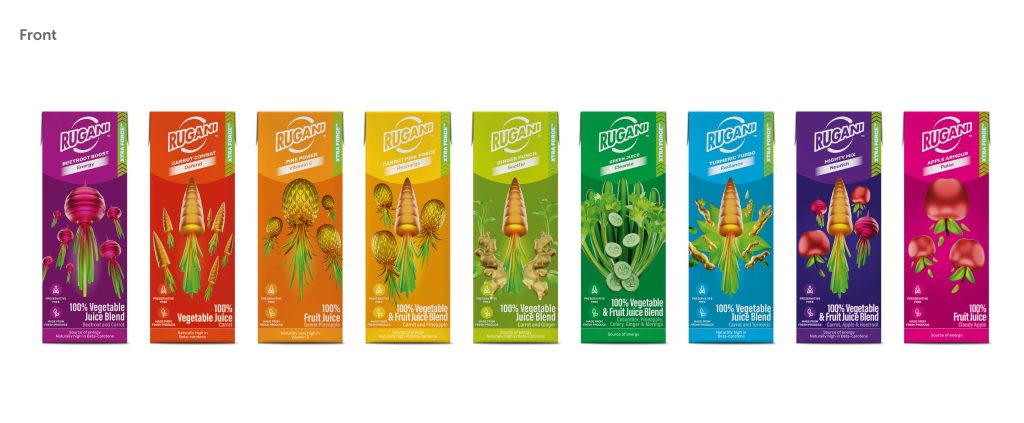
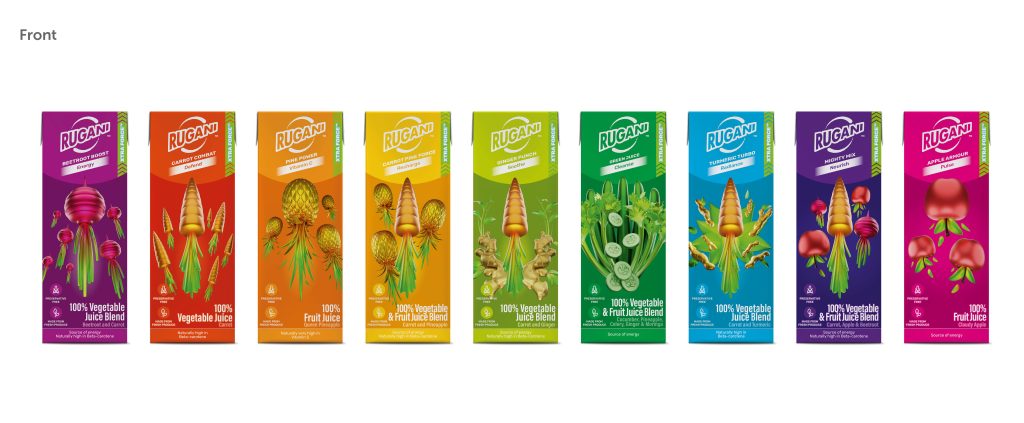
Some vertically integrated South African producers – such as Rugani Juice – have built their positioning around transparency in how juice is produced, including producing juice without a concentration and reconstitution stage.
While concentrate remains fully legal, removing that intermediate step creates a more transparent production process – making it easier for consumers to understand how the product is made and what goes into it.
According to Rugani’s Commercial Head, Simonne Fourie, consumer questions have become more detailed in recent years.
“Shoppers are asking where ingredients come from and how they are processed,” she says. “For us, transparency is not a marketing message – it is how we operate.”
The distinction is not about declaring one production method superior to another. It is about reducing ambiguity in a category built on perceived health.
Why This Matters
Wellness categories depend on credibility. When language becomes more sophisticated than consumer understanding, scepticism follows.
“100% juice” is legally defined. But its emotional meaning to consumers often extends beyond regulation – suggesting freshness, minimal intervention and proximity to source.
As the category evolves, brands that articulate how their products are made – in accessible, plain language – may find that transparency itself becomes their strongest differentiator.
Because in a category built on trust, clarity is no longer optional.